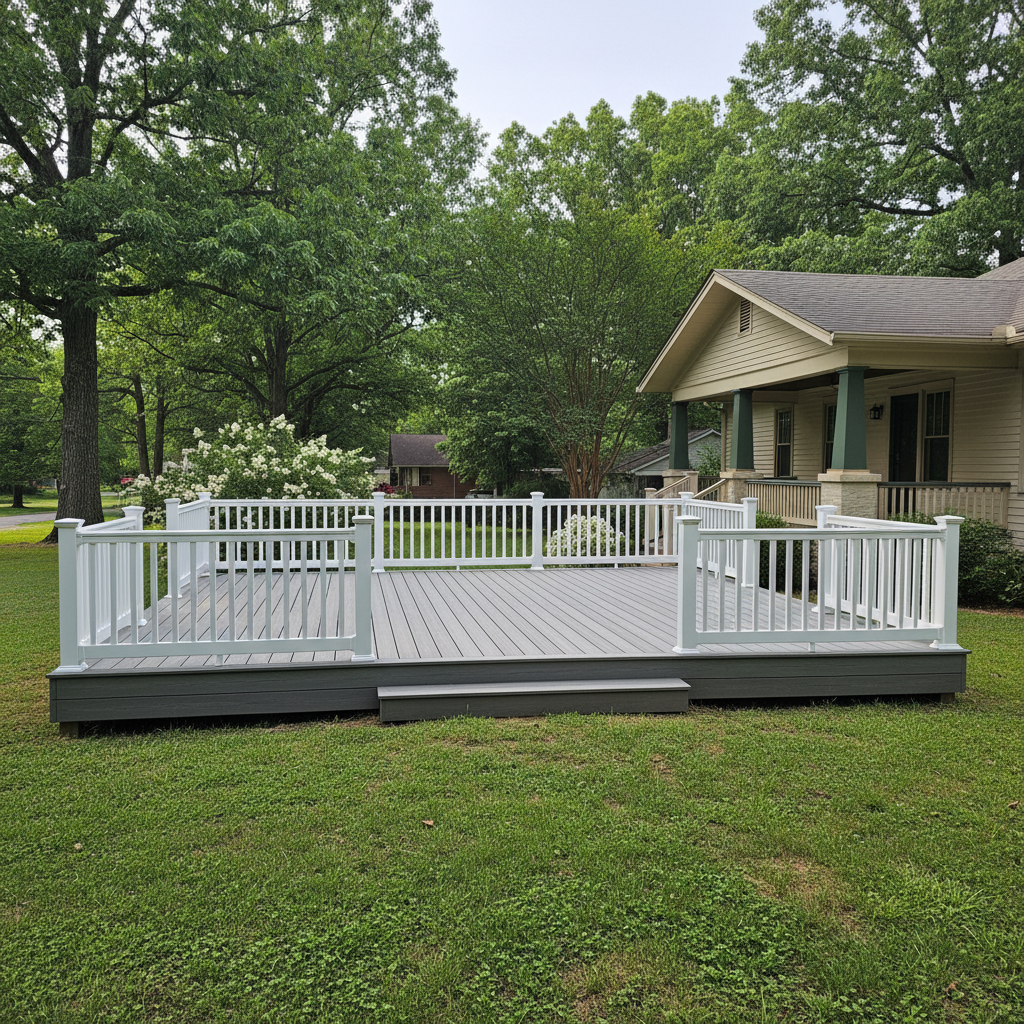
Picking a deck builder in Conway is mostly a matter of figuring out who actually understands what the ground here does to a structure, and who's just good at pouring a slab of sales talk. Both kinds of people will show up with a tape measure and a smile. Only one of them will still be answering your calls in five years when a post starts to lean.
This isn't a pitch for one company over another. It's what to actually check before you hand someone a deposit, because a deck is one of the few home projects where the mistakes are buried in the ground and don't show up until the thing is already built on top of them.
Why footings matter more here than the brochure photos
A lot of Faulkner County sits on clay, and clay moves. It swells when it's wet from a spring downpour and shrinks hard during a dry August stretch. A footing that's just a bag of concrete dumped in a shallow hole will ride that movement, and a deck riding on footings that move unevenly is a deck that racks, that squeaks, that eventually pulls its ledger board off the house. Ask any builder you're talking to how deep they're going. For an attached deck in this area you're typically looking at footings down around 24 to 36 inches depending on soil conditions on your specific lot, not a flat answer they give to everyone. If someone quotes you a number before they've looked at your yard, that's a guess, not an answer.
Ask whether they're using rebar in the footings or just concrete. Ask how the posts connect to the footing, a bolted post base bracket keeps the wood off the wet concrete and off standing water, which matters because Conway gets real rain in March through May and the ground under a deck often stays damp for days after. Wood sitting in a puddle of its own footing is wood that rots from the bottom up, and you won't see it until the post is already soft.
Permits aren't optional, and skipping them tells you something
Decks attached to the house, and most decks above a certain height off grade, need a permit through the City of Conway's building department, or through Faulkner County if you're outside the city limits. An inspector will typically want to look at the footings before they're covered up, and again at the ledger attachment and framing before decking goes down. That's not bureaucracy for its own sake. It's the one outside check that catches a ledger bolted with deck screws instead of lag bolts or structural screws, which is a failure waiting to happen the first time twelve people stand out there for a cookout.
If a builder tells you permits are a waste of time, or that they'll just handle it under the table, walk away. A permitted job also means there's a paper trail if something goes wrong later and you need to sell the house. An unpermitted deck can hold up a closing, and buyers' inspectors in Conway know what an unpermitted addition looks like.
If your lot is in one of the newer subdivisions off Dave Ward or out toward Lollie, there's a decent chance there's an HOA with its own rules on deck height, footprint, or even stain color. Older neighborhoods closer to downtown or around Hendrix rarely have that layer, but they come with their own wrinkle: houses from the 1950s through the 70s sometimes have additions, buried lines, or old concrete you don't know about until someone starts digging. A builder who's worked around here will ask about a utility locate before they dig a single footing, not after.
What a real estimate looks like
A serious quote breaks out materials and labor separately and names the lumber. Pressure-treated pine for the frame is standard and fine, but ask what grade and whether it's rated for ground contact where it needs to be. If composite decking is part of the plan, ask which brand, because hidden fastener systems, board spacing, and expansion gaps all vary by manufacturer, and a crew that's only ever installed one brand badly will fight the material on a different one.
A lowball bid usually means one of three things: cheaper lumber than you think you're getting, a crew that skips the permit and the inspection, or someone who's planning to make up the difference with change orders once the old deck is already torn out and you're stuck. Watch for a quote that's dramatically under the other two or three you got. Nobody in this trade is sourcing concrete and PT lumber for half of what everyone else pays.
Questions worth asking before you sign anything
- How deep are the footings going, and why that depth for my yard specifically
- Are you pulling the permit, or is that on me
- What's the joist spacing, 16 inches on center is standard under most decking but some composite brands require closer
- What holds the railing posts, through-bolts into framing or just screws into the rim joist
- What's the warranty on labor, separate from whatever warranty the lumber or composite manufacturer offers
On that railing question specifically: code requires a 36-inch minimum height and baluster spacing that won't let a 4-inch sphere pass through, because that's roughly the size of a toddler's head. A builder who doesn't know that number off the top of their head hasn't built many decks with railings, which is most of them.
What to walk away from
No written contract. No proof of insurance when you ask. A verbal promise that the deck will be done in a weekend when the scope clearly involves footings, framing, decking, and railing, three stages that each need time to cure or set before the next one happens. A crew that wants full payment up front before any material shows up on site. Someone who can't tell you which direction the joists will run or how the deck will drain water away from the house foundation instead of toward it.
None of this is complicated once you know what to ask. It just takes someone willing to answer in specifics instead of in reassurance. If you want to talk through what a deck would actually look like on your lot, footings, layout, materials and all, that's the kind of conversation we have before anyone signs anything over at Evergreen Deck Co.